Shoulder Surgery Part 1
Background
Rewind 18 years and my brother and I were lifting weights in a gym in SoHo, Tampa. I reflect fondly on that time period: Michael and I living together like slobs, pushing each other in the gym, getting swole before his wedding. It was at that gym that the first twinges of pain started shooting through my shoulder - age 20.

A smart person would have stopped and recuperated. If that doesn't work, the typical order of operations is:
- Meet with a PCP
- Get referred to an orthopedic surgeon
- Cortisone shot
- Physical therapy
- Peptides?
- Shoulder arthroscopy + repair
I did not do that. I "pushed through the pain" and altered my form to avoid the pain. No more elbows out, keep 'em tucked, maybe skip shoulder workouts every now and then. I did everything but address the core problem. Admittedly, this worked pretty dang well. No chronic shoulder pain, decent mobility, but certain movements, no matter what, always hurt. My wife Kay could lift heavier weight than me on certain shoulder exercises. She definitely can now.
Sabbatical Reinjury
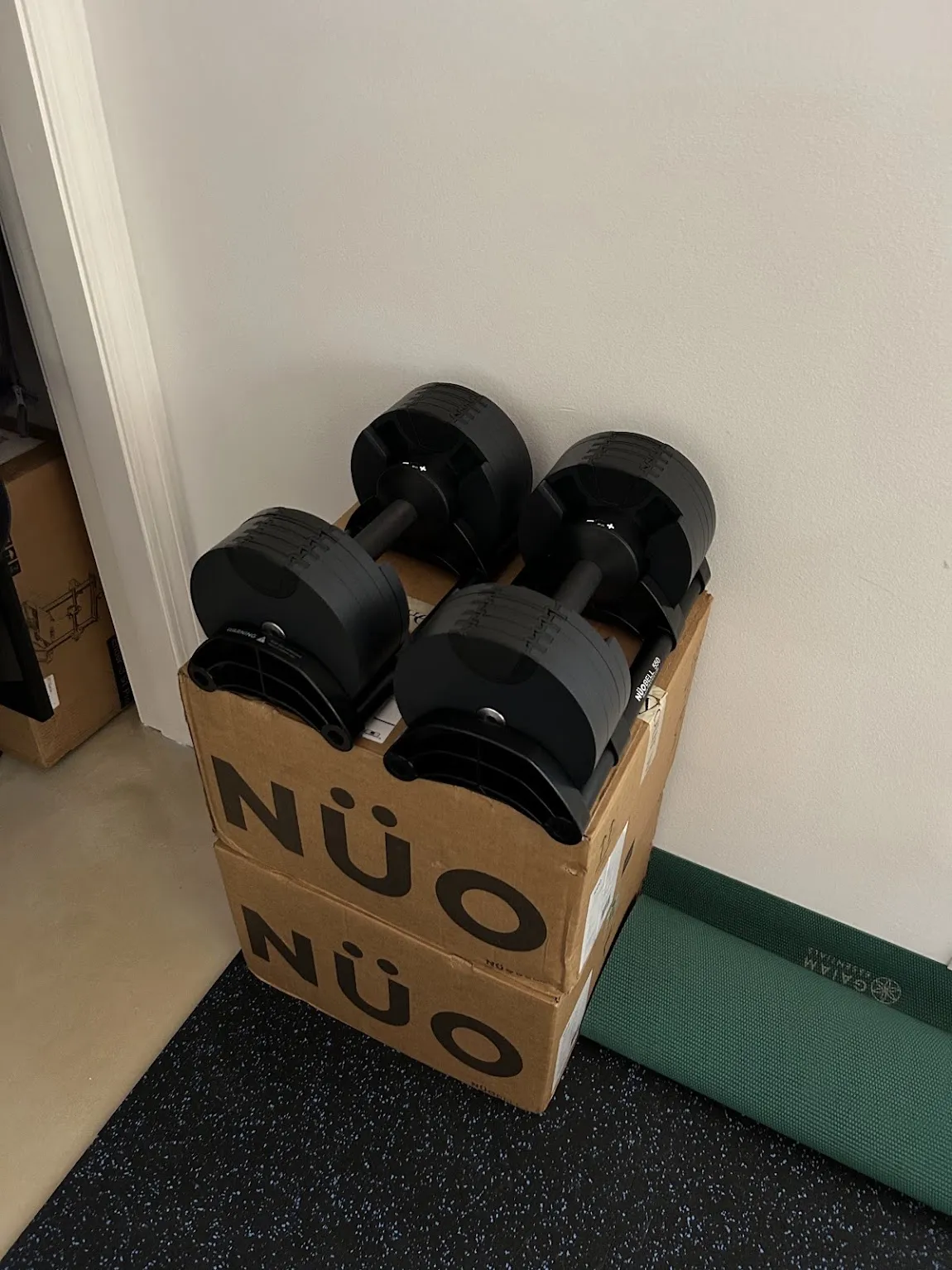
I fall in and out of lifting like everyone else. Periods of extreme dedication to the point of stupidity followed by large gaps of inactivity due to injury or burnout. It was during my recent sabbatical that I began another period of extreme dedication. I built my own home gym complete with a pair of Nuobell dumbbells (which I absolutely love) and a nice adjustable workout bench. I really got back into the groove and felt like a million bucks. I then promptly injured my shoulder again. Or rather, re-awakened a previously unaddressed injury that I've been navigating around for 18 years. I know this because no acute injury occurred. There was no "oh shit" moment where something popped or shot sharp pain down my shoulder. I was met with the increasingly dull pain and instability that had plagued me many years ago.
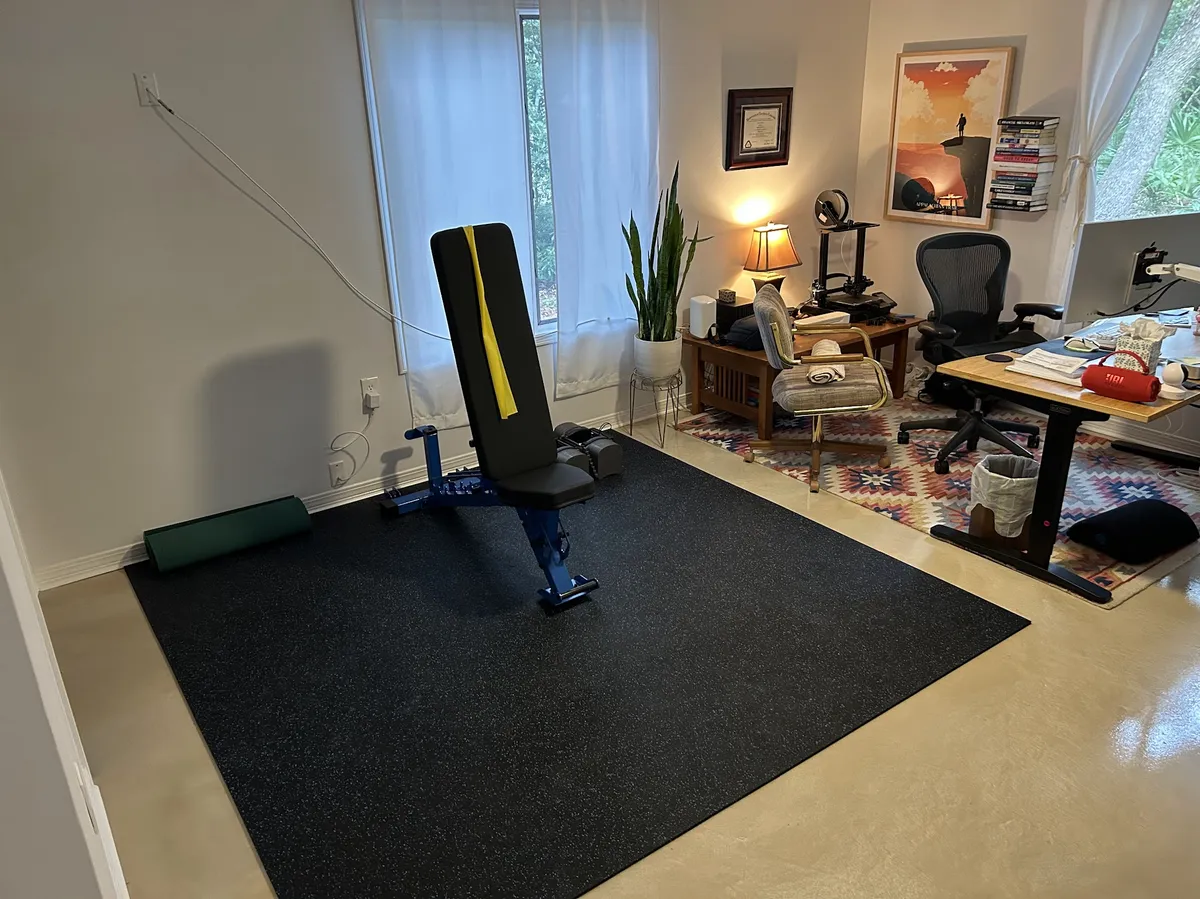
It was also during the sabbatical that I decided I wanted to be more in the driver's seat for my health. So instead of navigating away from the pain and ignoring it, I finally decided to take it head-on. I scheduled the PCP, I did the cortisone shot, I did the physical therapy for 8 weeks, and none of it did a damn thing. And finally, for the first time ever, I consulted with an orthopedic surgeon. He had me do an MRI, which came back positive with "there's probably something wrong in there," as my doctor put it, "but you can't really trust what the technician says" - it's "just a formality - I need to get in there and take a look." He recommended arthroscopic surgery to fix whatever he finds in there.
Shoulder surgery
A few weeks later, I was in and out of the surgery center same day. While poking in my shoulder, the doctor found a tear in the labrum. The labrum is a ring of cartilage within the shoulder socket that keeps the humerus (the end of the upper arm that attaches to the shoulder) nestled in firmly. Its core function, as I understand it, is stabilization. People who have traumatic shoulder dislocations tend to tear their labrum, and it's also why they tend to be able to re-dislocate, due to the stability of the labrum being worsened.
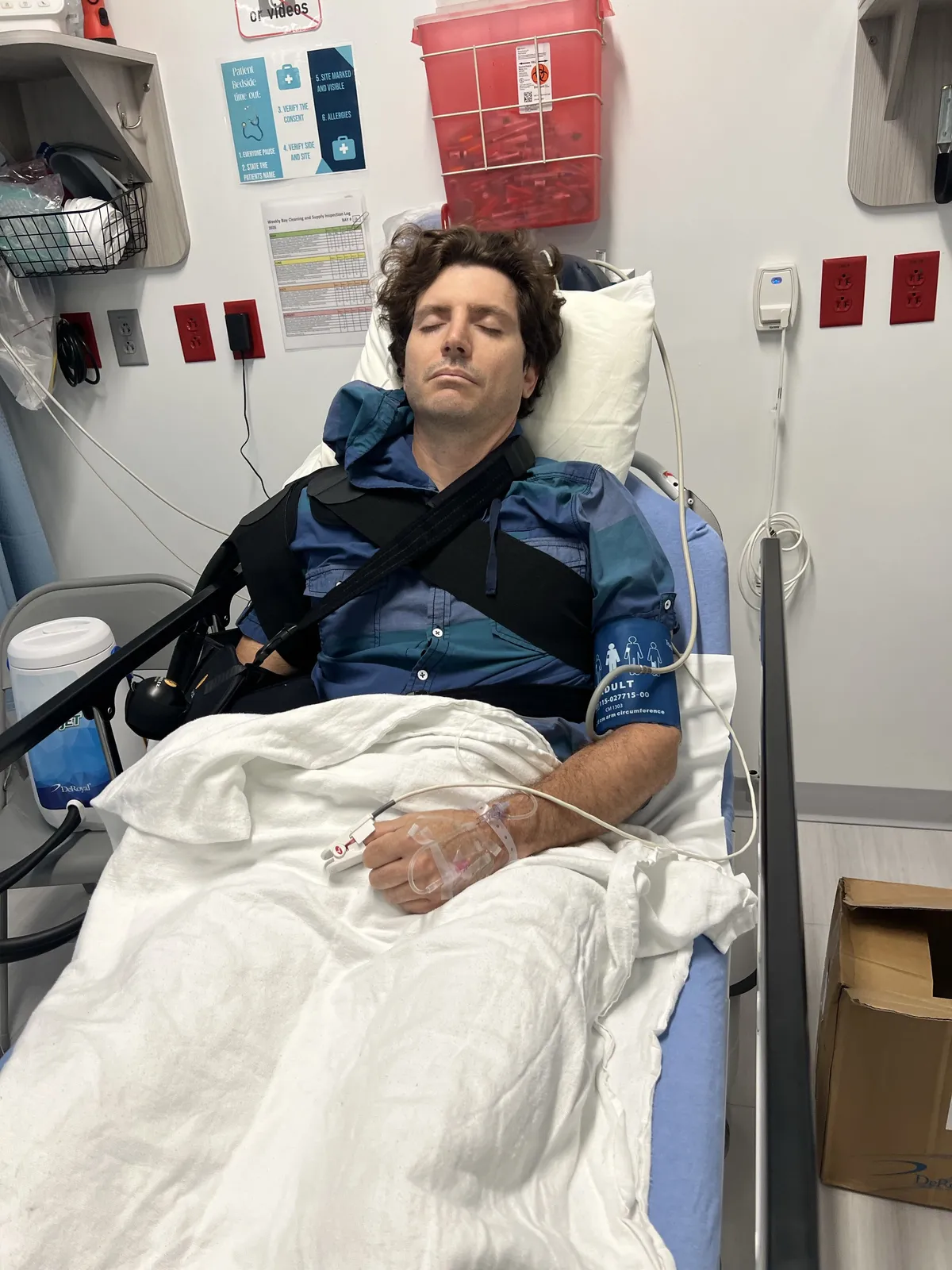
I never had a severe dislocation, so I don't know what the heck happened. At this point in time, I don't even know if the labrum tear was the cause of my pain, though surely that's a pretty fair assumption. Either way, the doctor performed what is called a Bankart repair. He stuck three anchors in the bone around my shoulder socket and then tied the torn cartilage back to the socket. Kay and I watched a video of a Bankart repair being performed on YouTube and it's absolutely brutal looking.
Shoulder surgery recovery
One surprising thing about shoulder surgery is they typically perform what is called a "nerve block." They effectively paralyzed me from the shoulder down and it lasted for 15-20 hours. So, leaving the surgery center, strapped into a sling with a support pillow underneath, I did not feel a dang thing. For a brief fleeting moment I felt "hey, this might not be so bad." The doctors, the nurses, and even my dad repeatedly warned me to stay ahead of the pain - do not take pain meds when it starts to get uncomfortable, take them well ahead. The anesthesiologist who did the nerve block told me to take pain meds starting at 12 AM before the nerve block faded in the middle of the night.
Instead of writing out at great length what recovery has been like, I will bullet point out my learnings and experiences:
- The sling with accompanying support pillow is a labyrinth of Velcro and straps that can all be microadjusted. Keeping my arm high and tight to start was good enough, but as feeling came back, it was important to become acquainted with the sling and microadjust to comfort.
- I stayed ahead of the pain meds. They say every 6 hours - I would bend the rules and do every 4 hours. My pain meds were oxycodone and Tylenol.
- The cryo machine for icing was definitely worth it. It's a small tank I fill with ice and water that circulates the ice-cold water into a bladder that wraps around my shoulder. It helped with swelling & pain and was a nice distraction from the gravity of the whole ordeal.
- I needed help with nearly everything: setting up the cryo machine, adjusting the sling, adjusting back pillows, getting dressed, preparing my meals, etc. The first few days were tough. After 48 hours I could take my first shower, and Kay had to help me with that and getting dressed.
- I stayed ahead of the pain meds. I already said this, but it deserves re-emphasizing. There was one night where I did not stay ahead and it was miserable sleep.
- Sleeping was by far the most difficult thing to do. There's no hack here. I made sure the shoulder had good support, kept it in the sling, took my meds, and just hoped I could stay asleep.
- I tried to start exercising my forearms (squeeze ball) and my biceps as soon as possible. Carefully taking my arm out of the sling and lifting my forearm up and down. I was supposed to keep my shoulder in one place, but I didn't want my elbow and forearm to stiffen up. I did this multiple times a day.
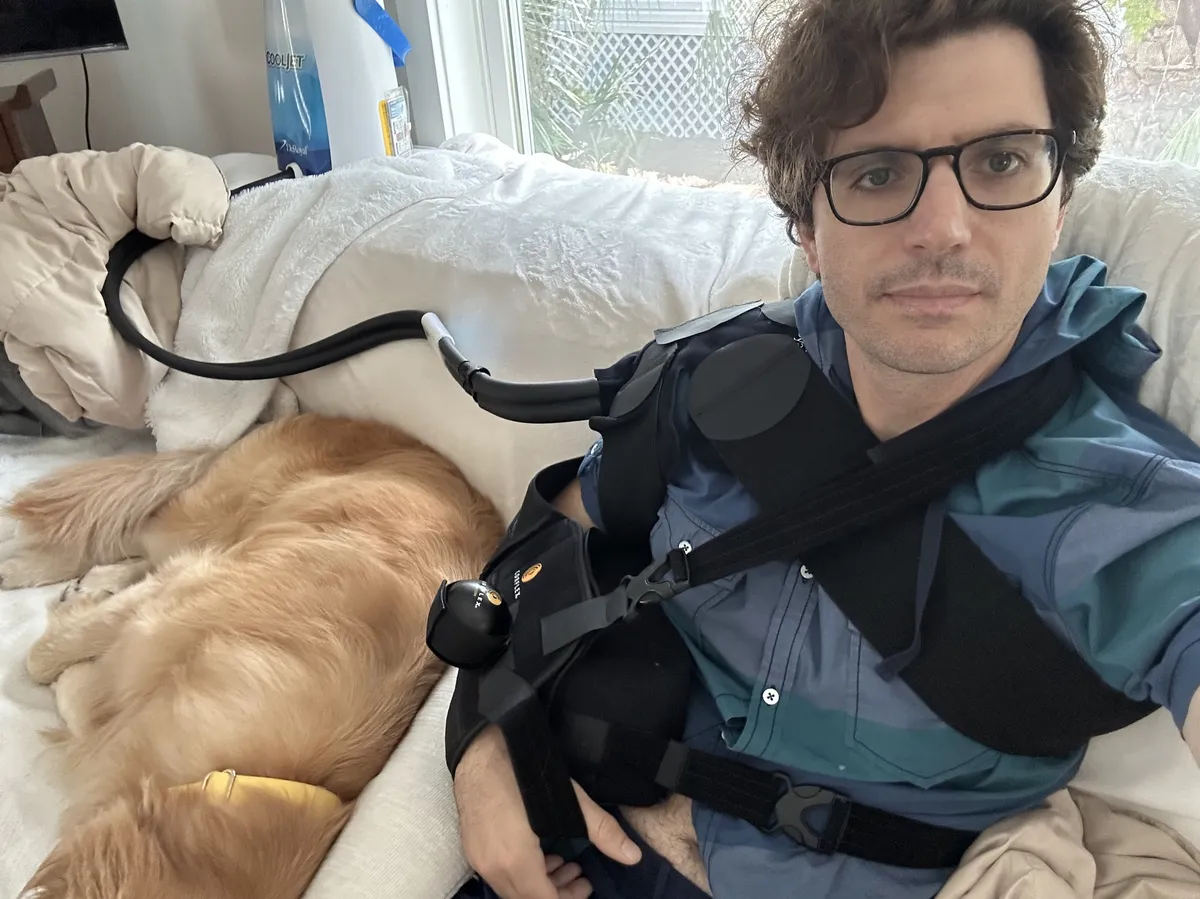
That was essentially the program until my follow-up with the doctor and PT two weeks later. Things slowly got easier - fewer unexpected pangs of pain while moving. Dressing and undressing started to get a bit easier to the point where help wasn't needed. Showering slowly got easier, though there were areas I still couldn't reach.
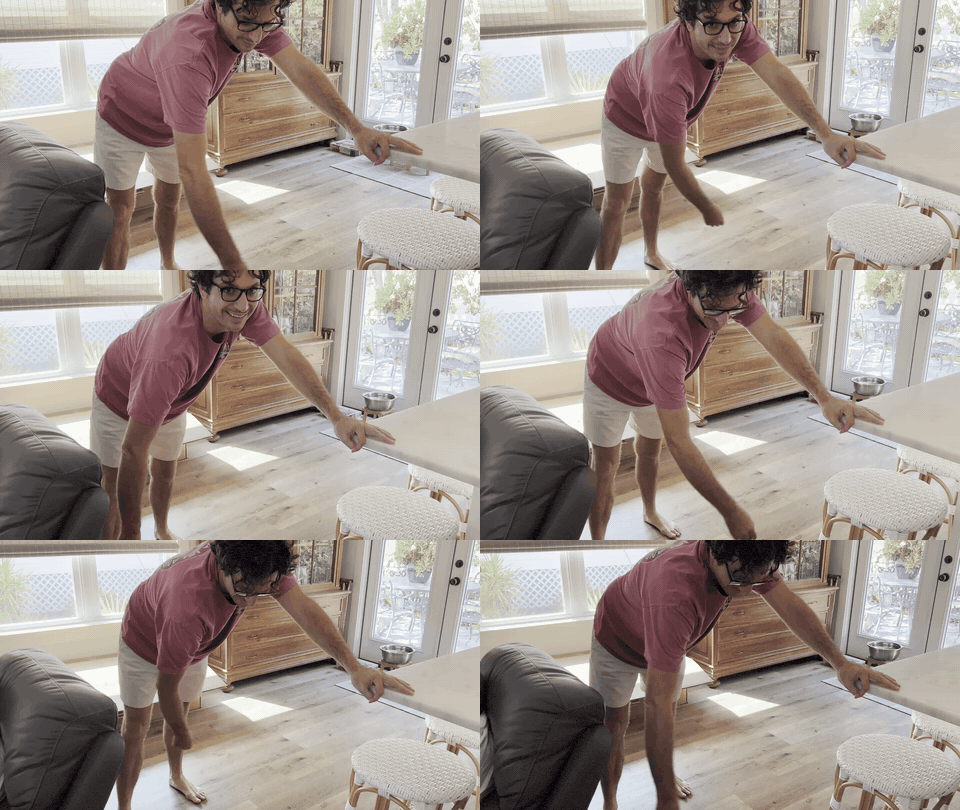
At the follow-up, the doctor said to keep the arm out of the sling unless I'm out and about. So at home (while I type this), my arm is out of the sling. I have a timer set for every 1.5 hours where I'm doing pendulum swings of my arm. It's where I bend over 90 degrees and then use my body to swing my arm in clockwise and counter-clockwise motions to try and get the shoulder moving. I'm also doing weightless shrugs and squeezing my shoulder blades together to keep motion in my shoulder.
I had my first PT appointment a couple days ago. The therapist was surprised at how stiff I was and felt as though I should have been doing pendulums well before the follow-up visit and PT. I have gotten conflicting information here. The doctor stated it's all about healing and then worrying about unstiffening later. There's probably some middle ground, but I'm not worried.
That's it for now
So that's where I sit right now. I'm keeping my arm out of the sling but still not using that arm to do much other than hold lighter things. I do the pendulums every 1.5 hours, and I have 5 weeks scheduled out with PT about 2-3 times a week. My follow-up with the doctor is slated for 4 weeks from now. Overall, it will likely be close to 6 months before I'm back to 100%. I'm nervous about the journey it will be to get there, but I'm hopeful this will have been a good decision to set me up for the rest of my life without pain and in a position to stay active.